My Documentary Approach
During my photography studies, I came to understand that photography is never a neutral act. As Susan Sontag explored in her writing “On Photography”, the way we take pictures is always shaped by our own point of view. Every frame is a choice and a personal interpretation of the world, rather than a completely objective record of it.
With this in mind, I approach my documentary projects by trying to make my presence as unnoticeable as possible, allowing the people and places I photograph to exist beyond the act of being photographed. Although I know that complete objectivity is impossible, I try to approach each subject with openness, respect and a willingness to understand perspectives different from my own.
My process begins with spending time. Whenever possible, I get to know the people and places I want to photograph before bringing my camera into the situation. These first interactions allow me to build relationships, become familiar with the environment and develop an understanding that goes beyond what can be shown through photographs alone.
Through this process, I aim to create photographs that reflect not only what I see, but also what I learn from the people and places I get to know. Rather than imposing a story from the outside, I try to develop a visual interpretation based on time, trust and observation. Ultimately, my documentary practice is an ongoing attempt to understand the world around me while remaining aware that I can only see it from my own perspective.
Fringe 25
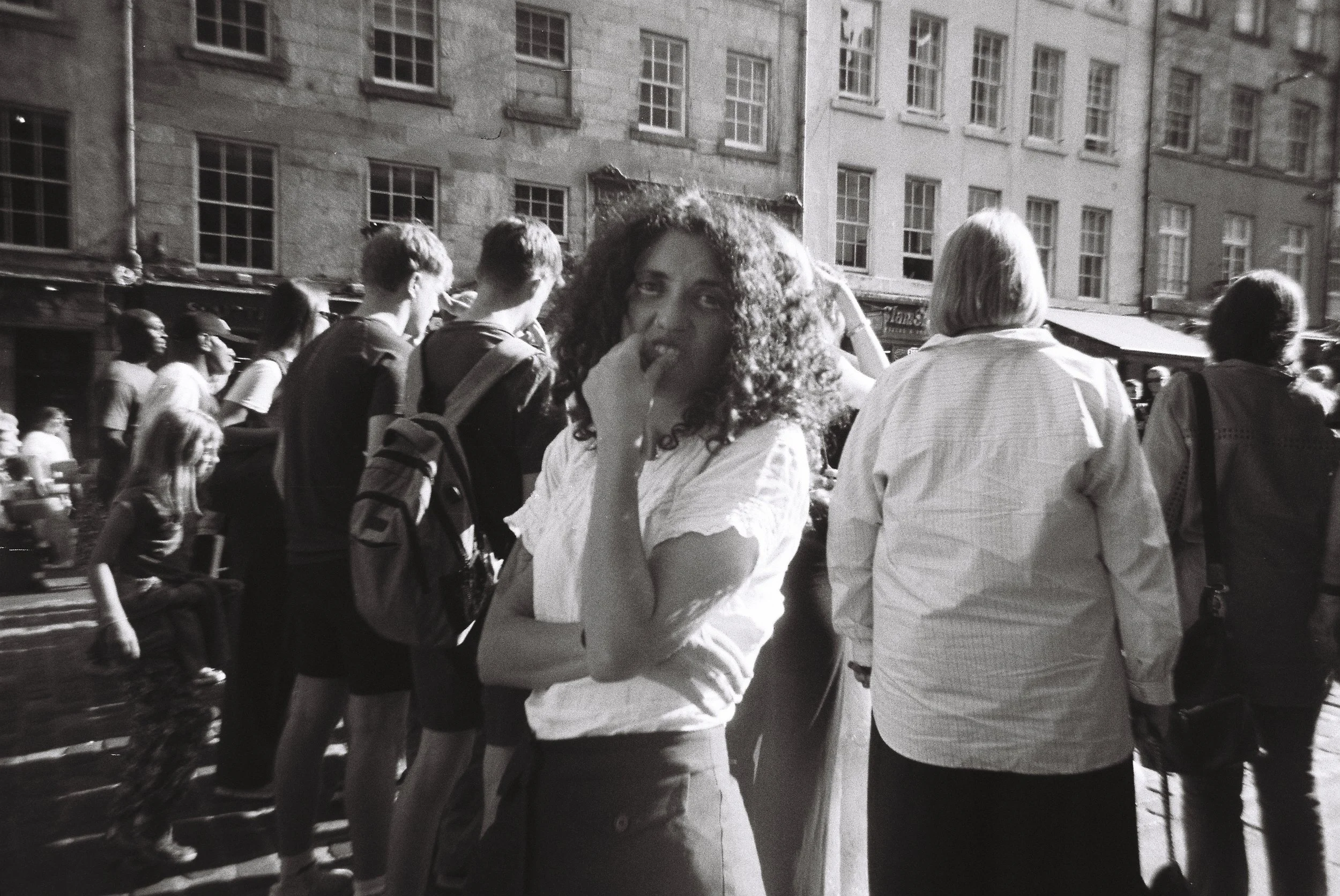
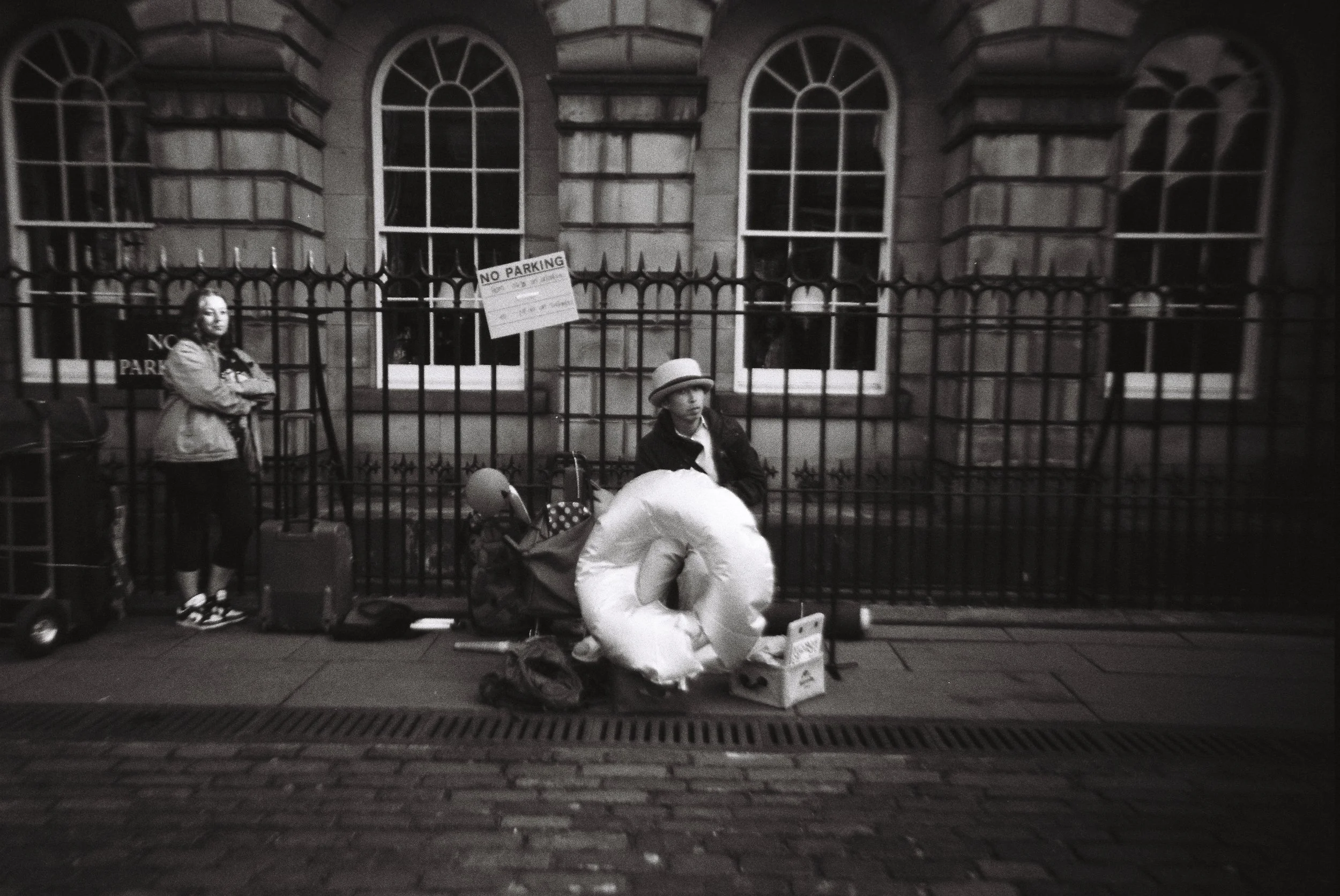
The Edinburgh Fringe Festiva is the biggest arts festival in the world. It features all kinds of actors and theatre companies in venues across the city, but I chose to focus entirely on the street performers. To be honest, I chose them because they were the most accessible to approach. I didn't need to send emails or ask for official permission. I just had to walk up to them on the street. It was scary at first, but it was the best way to connect.
Everything started because I noticed that everyone takes pictures of them performing. But I kept thinking: Who are these people, really? Who is the person behind the performer? That curiosity is why I began approaching them.
Because street artists are used to crowds, they instantly start posing when they see a lens. I wanted the exact opposite, I wanted to see their real, everyday life. To do this, I had to become a friend first and a photographer second. I spent weeks with a small group of street performers. I hung out with them when they were not performing, went to watch other street shows to support them, and became part of their group. Soon, they felt comfortable enough to stop posing and just be themselves.
I chose to shoot this project entirely on black and white film. It was one of my first times using only film. Because of this, some pictures are not perfectly sharp or perfectly exposed. But these imperfections fit perfectly with street performing, where you never know if a live show will go well or not.
If I learned something from this experience, it is that it does not matter if a show or a past project went wrong. The performers taught me to just let it go and start again. One of their shows might fail, but then they do the next one and it goes amazing. This experience taught me to let mistakes go, keep working, and keep doing. To me, the flaws in these photos show that same unpredictable reality.
This project looks past the stage personas to show the real people underneath. I want to keep working on this series in the future, spending even more time with them during their training and rehearsals.
Scot - ART
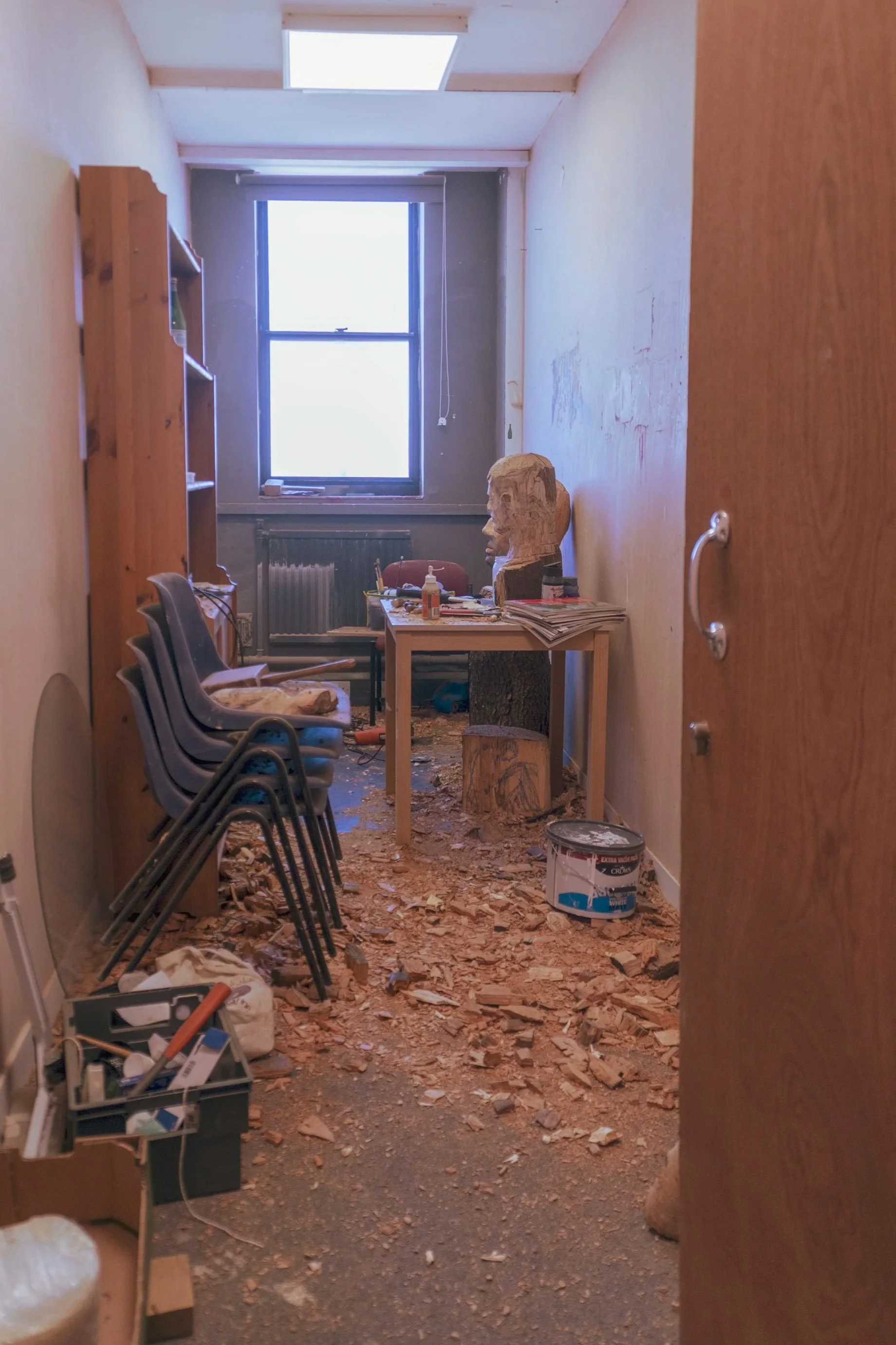
This project is about a very special place in Edinburgh. The building is now run by a charity called Scotland's ART (Scot-ART), but for a long time, everyone knew it as Edinburgh Palette at St Margaret's House. It is a massive building that provides affordable studio spaces for all kinds of artists, painters, and creative makers.
I usually, only focused on documenting people. I started wondering: Is it possible to create a portrait of a place instead? And how would I do it? I chose this building because it has an amazing energy and is filled with so many different creative lives.
I was deeply inspired by the famous photographer André Kertész. He once made a beautiful series of photos inside the art studio of his friend, the painter Piet Mondrian. Even though Mondrian was not in the pictures, you could completely feel his energy. The spaces looked like a portrait of the person, without actually showing the person there.
I wanted to try the exact same thing. I started visiting the building without my camera first, just to see how people interacted and how the building made me feel. Slowly, I got to know the artists and their studios. I began capturing their rooms, their messy workbenches, their tools, and their unfinished art.
Through these objects, I wanted to bring the true energy of the artists into the frame. This project is my vision of that experience, a collection of portraits told entirely through the spaces these creators leave behind.
Exposed 25
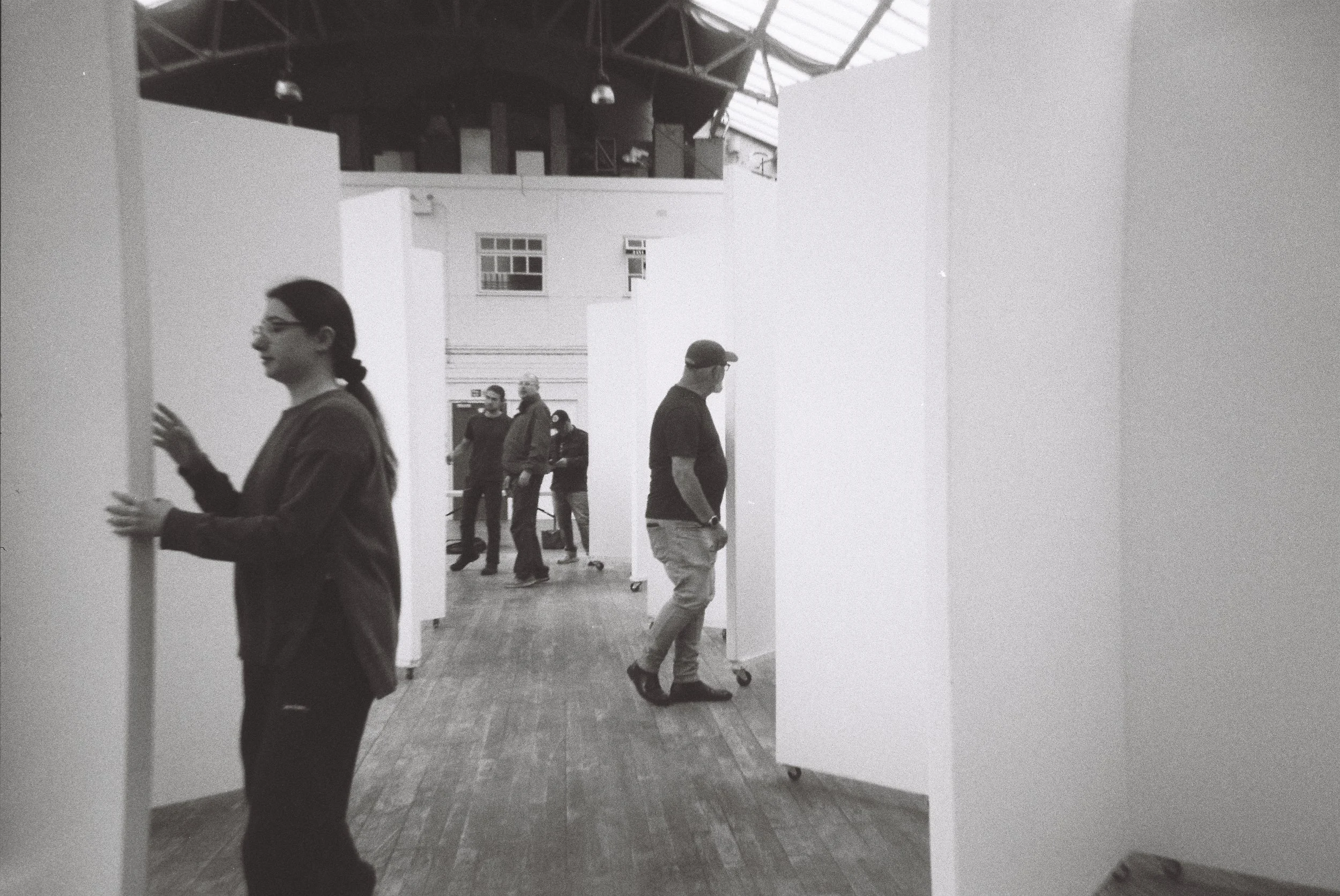
This series started as a completely personal project. I wanted to capture my own memories, almost like a visual diary. It documents the intense, exciting day spent setting up our Graduate Photography Exhibition.
When I look at these photos now, I can still completely feel the exact energy of the moment, the hard work, and the connection between the people who were there with me. It brings back all of my memories from those days.
This was my second time deciding to shoot a project completely on analog film. I really love how the black and white film aesthetic works for this series. The grainy, timeless look of black and white film adds a beautiful feeling to the images. It helps focus on the expressions, the teamwork, and the raw emotion of building something together from scratch.
Even though it started just for me to remember a special time, it turned out to be a story I really wanted to share on my website.
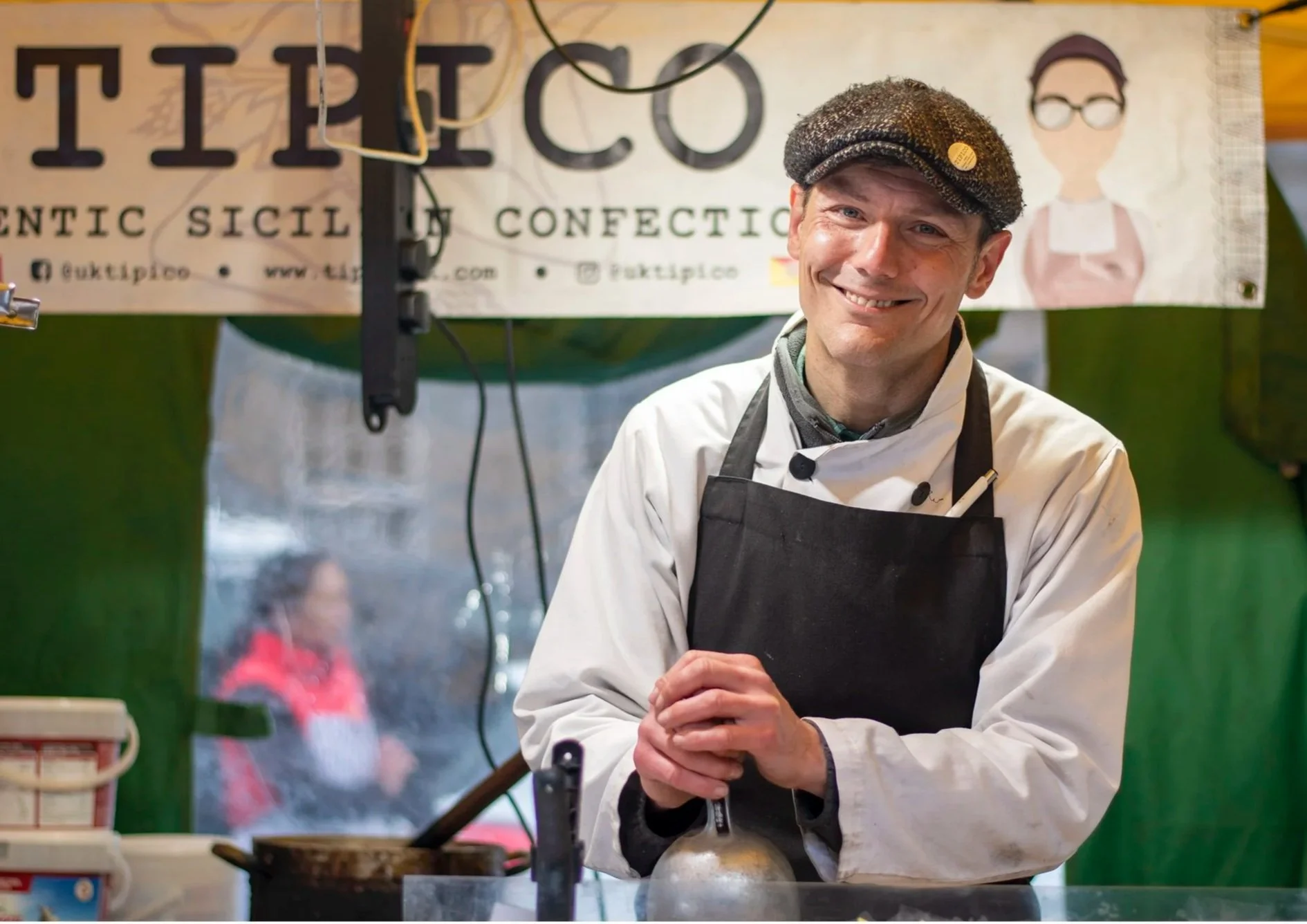
Tipico
This is the very first documentary project I ever shot. I decided to include it on my website for two important reasons: to show how much my technical skills have grown since the beginning, and to make sure these meaningful images aren't just hidden away in a computer drive forever.
The series follows a man named Michele (Michelino), who makes traditional, homemade Sicilian sweets like caramelized nuts and fresh cannoli. I spent months following him around different street markets, documenting his everyday routine. If I were to do this project today, I would probably expand it to look at the entire street market scene. But at the time, focusing completely on his single market stall was exactly what I needed.
Michele was not used to being in front of a camera, but he completely opened up to me. Because his work was very rhythmic and repetitive, it gave me the perfect chance to practice my camera settings, try different angles, and capture quiet moments while he cooked. He was incredibly patient with me while I was still learning the technical side of photography.
More than anything, I am deeply grateful to Michele. He didn't just let me take his photo; he became a true friend in town. This project is a tribute to his daily hard work, a celebration of traditional Sicilian craft, and a reminder of where my documentary journey began.